We are your dedicated team for healthcare software development, building secure platforms such as patient portals, electronic health records (EHR), telehealth systems, and workflow automation tools that help your organization deliver better care and operate more efficiently every day.

Our consulting services help teams make smart, informed decisions before investing in new technology. We review your current systems, uncover technical or compliance risks, and outline what’s needed to reach your goals. Whether you're designing a product from scratch or updating outdated tools, these sessions provide a clear path forward. This phase typically comes first and lays the groundwork for development or infrastructure improvements.
We create HIPAA-compliant telemedicine apps that make it easy for patients and providers to connect through secure video calls, real-time chat, and appointment scheduling. These apps allow doctors to consult with patients from a distance, handle prescriptions, and review records. Each solution is carefully designed to function effectively in everyday clinical environments. It's easy to use, dependable, and built to grow with your team. They can also connect with your existing systems, like Electronic Health Records (EHRs), pharmacy platforms, or billing tools.
Our mobile apps support people in managing their health directly from their phones. Users can book appointments, check symptoms, message doctors, or track chronic conditions. We focus on healthcare application development for iOS and Android. These apps prioritize privacy and usability. Features like reminders, multiple language options, and personalized insights make them a helpful part of someone’s daily health routine, not just a one-time tool.
No two healthcare teams work the same way, so we create software that matches how yours operates. This might include launching a new digital health platform or improving internal tools. Projects can involve patient portals, admin dashboards, scheduling systems, or billing support. From early planning to ongoing updates, we focus on custom healthcare software development that fits into your workflows, meets regulations, and evolves as your needs change.
We offer blockchain and Web3 development services tailored to the unique needs of the healthcare industry. These technologies support secure patient identity management, protect medical records against unauthorized changes, and provide transparent access logs for audits or compliance. Blockchain also helps improve data exchange between providers, insurers, and third-party platforms by offering trust and traceability across all transactions.
Behind every great healthcare application is a strong technical backbone. At Solicy, we offer healthcare IT services to support your software beyond just design and development. Our team helps set up and manage the infrastructure that keeps your tools secure, reliable, and ready to scale. We assist with everything from cloud environments and system integration to ongoing maintenance and performance monitoring.
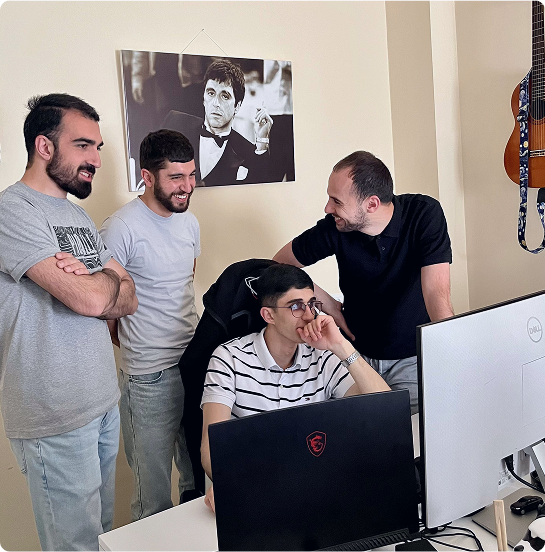

Our team has worked with a range of healthcare organizations, including hospitals, digital health startups, medtech companies, and insurance providers. This hands-on experience allows us to understand both clinical workflows and business priorities, so we can build software that fits into real care environments, not just technical specifications.

As a healthcare software development company, we understand the challenges providers face and build solutions that make everyday tasks easier. All of our healthcare projects are developed with data privacy and regulatory standards in mind from the beginning. We align our process with frameworks like HIPAA, GDPR, HL7, and FHIR to make sure your software is secure, ready for audits, and suitable for production use in regulated settings.

We design healthcare software with the end users in mind, focusing on simplicity, clarity, and accessibility. Patients need tools they can understand and trust, and clinical teams need systems that help them do their jobs without friction. Our design approach reflects the needs of both.
We build systems with security at the core to keep sensitive patient data protected during every interaction.
We apply data-driven tools to support smarter decision-making in patient care and healthcare operations.
We design apps that stay useful even when internet access is limited or temporarily unavailable.
We help connect medical devices and wearables to enable continuous care outside of clinical settings.

Mobile App Development
Crypto Launchpad Development
NFT Development
We support a wide range of organizations across the healthtech software development space. Some deliver direct patient care, others build digital health tools or promote wellness, but all rely on healthcare services supported by technology to work smarter, connect better, and improve outcomes. Our role is to help them get there.
Hospitals and large medical centers work with us to build or update systems that handle patient records, scheduling, billing, and internal communication between departments. We focus on software that fits existing clinical processes instead of forcing staff to change how they work, and we build with HL7 and FHIR standards so new systems can exchange data with what's already in place.
Startups building new healthcare products come to us when they need a technical partner who understands both software development and the regulatory side of healthcare. We help take an idea through to a working, HIPAA-compliant product, whether that's a patient app, a clinical tool, or a backend system supporting a larger platform.
Health insurance companies use our software to handle claims processing, member portals, and provider network management. We build tools that reduce manual claims handling and give members a clearer way to check coverage, submit documents, and track claim status without calling customer service for every question.
Independent practices and small clinics work with us to get the same level of software capability as larger health systems, scaled to their size and budget. This includes appointment scheduling, patient intake forms, billing, and secure messaging between patients and staff, built to run without needing a dedicated IT team.
Wellness and fitness brands use our development services to build apps that track health metrics, manage subscriptions, and connect with wearable devices. We handle the data privacy side carefully, since health and fitness data often falls under the same protection requirements as clinical health information, even outside a hospital setting.
Device manufacturers work with us to build the software layer that connects to their hardware, including companion apps, data collection tools, and dashboards for clinicians to review device output. We're familiar with FDA software requirements and build with that in mind from the start, rather than treating compliance as something to address later.
Research teams and academic medical centers use our software to manage clinical trial data, patient consent tracking, and study workflows. We build tools that keep data organized and auditable, which matters both for day-to-day research work and for meeting the documentation standards that funding bodies and regulators expect.
Telemedicine companies work with us on video consultation platforms, virtual waiting rooms, e-prescribing, and patient intake systems built for remote care. We pay close attention to call reliability and data security here, since a dropped video call or a security gap matters more in a clinical context than it would for a typical consumer app.
At Solicy, we guide each project with care and structure. From the first conversation to long-term support, our process is built to meet the specific needs of healthcare providers, patients, and administrators. Each phase helps reduce risk, improve outcomes, and create software that fits the way people use it.
We start by learning what your organization needs. This includes understanding your care model, the people who will use the software, and the legal requirements you must follow. We use this information to outline the technical plan, identify potential roadblocks, and define a clear timeline.
We design layouts and user flows that make sense for doctors, patients, or support teams. This step focuses on usability. We create early versions of the interface that show how the software will function. This allows you to see the user experience in action and provide input before development begins.
Our developers build your software in stages, focusing on one part at a time. After each step, we show progress and gather your feedback. This way, you stay involved, and we can make updates quickly without losing time or quality.
We test everything carefully to make sure it works as expected. This includes checking that the software meets compliance rules, stays secure, and runs smoothly under pressure. We test with real healthcare workflows in mind, not just standard conditions.
We prepare your product for real-world use. Our team sets up the servers, connects the system with your existing tools like EHRs or lab software, and makes sure everything runs together without issues. We also handle data migration when needed.
After launch, we stay involved. We fix technical issues, answer questions, and add new features as your needs grow. We also help you adapt to changes in healthcare regulations, so your software stays useful and compliant over time.
HIPAA-compliant software development means building healthcare applications that meet the security and privacy requirements of the Health Insurance Portability and Accountability Act. This includes end-to-end encryption of protected health information, role-based access controls, audit logging, secure data storage, and breach notification procedures. At Solicy, every healthcare platform is architected for HIPAA compliance from the start of the project, not added on at the end.
An EMR (Electronic Medical Record) stores a patient's medical history within a single practice. It is essentially a digital version of a paper chart used internally by one provider. An EHR (Electronic Health Record) is designed to share patient data across multiple providers, clinics, and health systems, supporting continuity of care and interoperability. Solicy builds both, with HL7 FHIR integration for cross-system data exchange.
A focused healthcare MVP such as a patient portal or basic telemedicine app typically takes 10 to 16 weeks. A full EHR system, clinical workflow platform, or health data integration suite generally takes 6 to 12 months. Timeline depends on the complexity of your compliance requirements and integration needs. We provide a detailed estimate after the initial discovery phase.
Yes. We build healthcare platforms with HL7, FHIR, and DICOM integration capabilities to connect with existing EHR systems, hospital information systems, laboratory platforms, billing tools, and medical device data sources. We have experience working within legacy infrastructure constraints common in clinical environments.
Beyond HIPAA, we build for GDPR for European health data, FDA 21 CFR Part 11 for electronic records in regulated environments, PIPEDA for Canada, and HITECH Act requirements. We also support HL7 FHIR R4 interoperability standards and ONC certification requirements for health IT systems sold in the US market.
Yes. We design and build full telemedicine platforms including secure video consultation, real-time chat, appointment scheduling, e-prescribing, and patient intake. Our telemedicine applications are built for HIPAA compliance, designed around both patient and provider workflows, and optimised for web and mobile delivery.
Yes. Our discovery and consulting phase reviews your current systems, maps your clinical workflows, identifies compliance risks, and produces a detailed project roadmap with cost estimates before development begins. This phase is available as a standalone engagement and is especially useful for organisations evaluating whether to build, buy, or modernise existing tools.
Yes. We build AI-powered features into healthcare platforms including predictive risk scoring, clinical decision support, NLP for clinical notes, medical imaging analysis, and patient engagement chatbots. All AI features are built with explainability and clinical validation in mind to meet the standards healthcare organisations and regulators expect.
Previous Industry
Next Industry